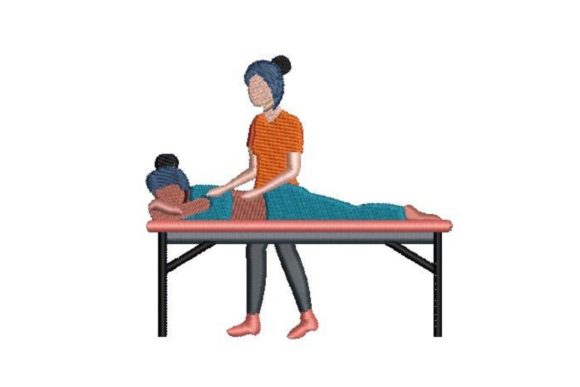
Reviewing the Massage Therapist at Work Design
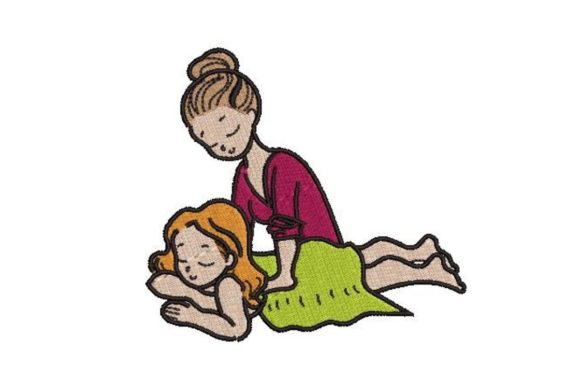
As a designer who spends more time staring at stitch maps than actual fabric, I have learned that not every machine embroidery design is created equal. Some are flashy but fragile; others are simple yet incredibly versatile. Recently, I evaluated the Massage Therapist at Work design to see if it holds up under the scrutiny of real-world production. This isn’t just about whether the file opens in your software; it is about whether the final finished product looks professional enough to sell or gift with confidence.
The first impression of this design is its approachable charm. It avoids the overly clinical or sterile aesthetics often associated with medical or therapeutic professions. Instead, it offers a stylized, friendly representation that feels warm and inviting. For a craft business owner, this mood is crucial. You are not just selling thread on fabric; you are selling an identity. A massage therapist wants their uniform or merchandise to convey relaxation, care, and professionalism. This design hits that note without relying on clichés that might look dated after a few seasons.
Real-World Application: The Custom Apron Test
To truly understand the value of an embroidery project, you have to imagine it in situ. I visualized this design stitched onto a high-quality, charcoal-grey linen apron—a staple for many wellness practitioners. The contrast between the light thread colors typically used in such designs and the dark fabric creates a striking visual pop. However, this is where practical judgment comes into play. If you are an Etsy seller planning to offer these as custom apparel, you must consider the stitch density.
In my assessment, the design appears balanced, but dense areas can cause puckering on lighter fabrics. For a heavy-duty apron or a structured tote bag, the density is likely ideal, providing a substantial, premium feel. For a thin cotton t-shirt, however, you would need to be meticulous with your stabilizer choice. A cut-away stabilizer might be necessary to prevent the fabric from distorting under the weight of the stitches, especially if the design includes solid fill areas.
Versatility Across Product Lines
One of the strongest assets of the Massage Therapist at Work motif is its adaptability. It is not confined to uniforms. I see significant potential for this design in the realm of personalized gifts. Imagine a cozy fleece blanket for a spa owner, or a set of embroidered tea towels for a holistic health boutique. The design scales well, provided you respect the limits of your hoop size.
For small shop product lines, consistency is key. This design could serve as a central branding element. Whether applied to a canvas tote bag design for clients to carry their oils and lotions, or as a subtle chest emblem on a polo shirt, it maintains its clarity. The lines are distinct enough to remain recognizable even when scaled down, which is vital for items like caps or small patches.
However, caution is advised when applying this to curved surfaces like baseball caps. The structural integrity of the design depends on the underlying geometry. If the design has wide, flat sections, they may bridge poorly over the curved front panel of a cap without proper hooping technique and backing. Always test on a scrap piece of the exact material you intend to use. This is non-negotiable for professional results.
Technical Considerations for Stitch Quality
When working with any digital embroidery file, understanding the stitch types is essential for troubleshooting. While I do not have the exact stitch count for this specific file, experienced designers know to look for a mix of satin stitch borders and fill stitch interiors. Satin stitches provide that glossy, raised look that catches the light beautifully, adding dimension to the handmade product. Fill stitches, on the other hand, cover large areas efficiently but can become bulky if the density is too high.
Thread color selection plays a pivotal role in the success of this design. For a massage therapist, calming tones like sage green, soft blue, or lavender work exceptionally well. These colors reinforce the theme of relaxation. Avoid neon or overly aggressive color combinations unless you are aiming for a very specific, modern pop-art aesthetic. The thread colors should complement the fabric texture rather than fight against it. On textured fabrics like terry cloth or waffle weave, simpler designs with fewer tiny details often perform better because the fabric itself adds visual noise.
If you are considering this for baby embroidery or delicate items, check the detail level closely. Tiny elements can get lost or become stiff knots if the stitch length is not optimized for small scales. Always run a test stitch-out on a similar fabric weight. Check for thread breaks, nesting, or registration issues where colors meet. These small technical checks save hours of unpicking later.
Commercial Viability and Branding
For commercial embroidery projects, the perceived value of the design is paramount. A clean, well-digitized design elevates the perceived quality of the garment. Customers associate crisp stitching with professionalism. If the Massage Therapist at Work design is used on employee uniforms, it helps build brand recognition. It turns a standard uniform into a branded asset.
Before listing any design assets or finished goods for sale, verify the licensing terms. The product description mentions multiple file formats, which is excellent for compatibility across different machine brands. However, always confirm whether the license allows for unlimited physical sales or if there are restrictions on digital redistribution. As an Etsy seller or boutique owner, protecting your business from copyright infringement is as important as the quality of your stitching.
Additionally, consider how the design looks in black and white. This is a pro tip for checking contrast and readability. If the design loses its definition when viewed in grayscale, it may rely too heavily on color contrast rather than shape definition. A strong design should be recognizable by its silhouette alone. This ensures it remains effective even if a customer chooses a monochromatic thread scheme.
Final Verdict for Makers and Designers
The Massage Therapist at Work design offers a solid foundation for a variety of custom apparel and accessory projects. Its strength lies in its thematic clarity and emotional resonance. It speaks directly to the target audience of wellness professionals and their clients. However, its success depends entirely on execution.
- Test extensively: Never skip the sample stitch-out on your specific fabric.
- Mind the stabilizer: Match the backing to the fabric stretch and weight.
- Check the details: Ensure small elements are not too dense for your needle size.
- Verify licensing: Know your rights before selling the finished product.
In the hands of a careful maker, this design can enhance a holiday gift, elevate a small business merchandise line, or add a personal touch to a wedding gift for a couple in the wellness industry. It is a tool, and like any tool, its effectiveness is determined by the skill of the user. Approach it with respect for the materials, attention to technical detail, and a clear vision for the end user, and it will serve your embroidery projects well.