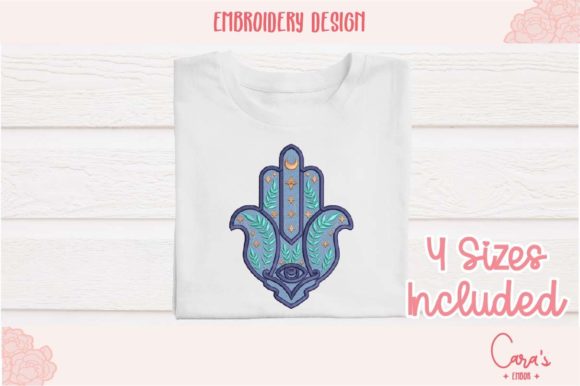
Reviewing the Hamsa Hand of Fatima Design
As an embroidery designer who has spent years digitizing and testing patterns for small businesses, I approach every new machine embroidery design with a critical eye. It is not just about whether the pattern looks good on a screen; it is about how it performs under the needle and how it resonates with the end customer. Recently, I had the opportunity to test the Hamsa Hand of Fatima, a design rooted in deep cultural and spiritual significance within the realm of Religion. This review is written for fellow Etsy sellers, crafters, and boutique owners who are considering adding this meaningful motif to their catalog of personalized gifts.
First Impressions: Mood and Aesthetic Appeal
The moment I loaded the digital embroidery file into my software, the immediate impression was one of elegance and protection. The Hamsa Hand of Fatima is often associated with warding off negative energy, making it a powerful symbol for home decor and personal items. Visually, the design strikes a balance between traditional symbolism and modern Embroidery aesthetics. It does not feel overly ornate or cluttered, which is crucial for maintaining clarity when stitched out.
The mood of this design is serene and protective. It feels classic rather than trendy, which means it has longevity in a product line. For a small shop product, this timelessness is invaluable. Whether you are targeting customers looking for spiritual comfort or those who simply appreciate intricate geometric and organic shapes, this design offers a broad appeal. It feels handmade and thoughtful, avoiding the sterile look that some automated conversions suffer from.
Versatility Across Product Categories
One of the strongest assets of the Hamsa Hand of Fatima is its versatility. In my testing phase, I visualized this design across various substrates to determine its commercial viability. Here is how it performs in different contexts:
- Baby Embroidery: For nursery items, this design works beautifully on muslin swaddles or crib sheets. The symbolism of protection aligns perfectly with the desires of new parents. However, care must be taken with stitch density to ensure the fabric remains soft against delicate skin.
- Wedding Gift and Keepsakes: As a wedding gift, this motif can be embroidered on linen table runners or custom pillowcases. It adds a layer of spiritual blessing to the union, appealing to couples who value tradition and meaning in their home decor.
- Home Decor and Towels: An embroidered towel featuring the Hamsa is a popular item in boutique hotels and spas. The design stands out well on waffle-weave or terry cloth, provided the stabilizer is chosen correctly to handle the texture.
- Apparel and Totes: On canvas tote bags or denim aprons, the bold lines of the Hamsa create a striking visual. It serves as a statement piece for a custom embroidery business, allowing for high perceived value with relatively low production time.
Navigating Technical Challenges and Fabric Textures
While the design is spectacular, practical application requires attention to detail. Not every fabric behaves the same way, and the Hamsa Hand of Fatima has specific requirements to look its best. When working with textured fabrics like thick towels or loosely woven linens, the finer details of the design might get lost if the needle penetration is not precise. I recommend using a cut-away stabilizer for these materials to prevent puckering and ensure the stitches remain secure after washing.
Another consideration is the use of stretchy fabrics, such as those used for baby clothes. If you are creating a personalized gift like a onesie, you must use a hoop size that accommodates the garment without distorting the knit. Additionally, dark fabrics present a challenge for visibility. If you are stitching on navy or black fabric, ensure your thread colors have high contrast. Metallic threads can add a luxurious touch but require slower machine speeds and careful tension adjustments to prevent breakage.
Curved surfaces, such as the sleeve of a shirt or the corner of a pillow cover, also require careful hooping. The symmetry of the Hamsa hand must be maintained; any distortion will be immediately noticeable to the buyer. Always center the design meticulously and consider using magnetic hoops for difficult-to-reach areas.
Enhancing Perceived Value and Customer Trust
From a business perspective, the emotional connection driven by the Hamsa Hand of Fatima significantly boosts giftability. Customers are not just buying a stitch pattern; they are buying a sense of security and heritage. This emotional resonance translates into higher engagement on social media and better conversion rates for online listings. When photographing the finished product, highlight the texture of the stitches and the context of the item. A printable mockup can help potential buyers visualize the design on their own items, but real-life photos of the embroidery on a cozy blanket or a crisp towel build trust.
For an Etsy seller, offering this design as part of a curated collection of spiritual or protective symbols can help establish brand authority. It shows that you understand the deeper meaning behind the art, not just the technical aspect of stitching. This builds customer loyalty and encourages repeat purchases for other occasions, such as housewarmings or births.
Practical Notes for the Embroiderer
Before launching this design into your production line, there are several critical steps to take to ensure quality control. Since the product description notes that it is suitable for clothing and home decor, you must verify the technical specifications yourself, as they are not explicitly detailed in the brief provided.
- Test on Scrap Fabric: Always stitch a sample on the exact fabric type you intend to sell. Check for puckering, thread breaks, and registration issues.
- Check Thread Color Contrast: Create mockups for both light and dark fabrics. Ensure the design remains legible and aesthetically pleasing in both scenarios.
- Confirm Hoop Size: Verify that the design fits within your standard hoop sizes. If it requires a large hoop, factor this into your pricing and production time.
- Review Stitch Density: High-density designs can make fabric stiff. For items like blanket embroidery or baby items, ensure the density is appropriate for comfort.
- Inspect Small Details: After stitching, examine the fine lines of the Hamsa. Are they clean? Do they pull? Adjust your tension or underlay settings if necessary.
- Verify Commercial Licensing: Before selling any handmade product featuring this design, confirm that your purchase of the embroidery file includes a commercial license. This is crucial for legal compliance and professional integrity.
In conclusion, the Hamsa Hand of Fatima is a robust and meaningful addition to any embroidery designer’s library. It bridges the gap between spiritual significance and decorative art, making it ideal for a wide range of personalized gifts. By paying attention to fabric choice, stabilizer selection, and stitch quality, you can create products that not only look beautiful but also carry a deep emotional weight for your customers. Whether you are crafting a wedding keepsake or a baby’s first blanket, this design offers the elegance and reliability needed for a successful commercial embroidery venture.